Taliban Policies Erase Decades of Progress as 2.4 Million Afghan Girls Denied Secondary Education
Five years after the Taliban's resurgence, Afghanistan stands alone globally in formally barring girls and women from education beyond primary school, reversing significant gains.
World·
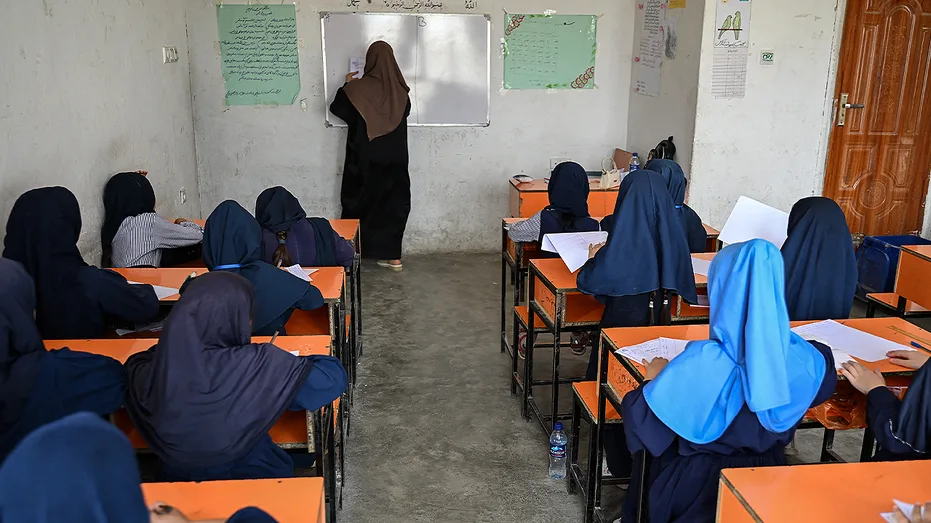
Five years into the Taliban's reassertion of control over Afghanistan, an estimated 2.4 million girls are still barred from attending secondary school. This policy has effectively undone decades of advancements in education, leaving an entire generation of young Afghan women without access to formal learning.
According to UNESCO, Afghanistan is currently the sole nation globally that formally denies girls and women access to education beyond the primary level. The United Nations agency recently reiterated its demand for the "immediate and unconditional" restoration of their fundamental right to education.
The UN agency highlighted that the repercussions of the Taliban's restrictive policies extend significantly beyond educational institutions. Women are largely excluded from most paid employment and public-facing roles, and their ability to travel freely is severely curtailed, often requiring a male guardian.
Women have been erased from public life, and as a new generation of girls grows without an education, their future becomes increasingly dark.
The Taliban regained control of Afghanistan on August 15, 2021, following the withdrawal of U.S. and NATO forces after two decades of military involvement. Shortly after their return to power, the Taliban prohibited girls from attending secondary schools. These restrictions were subsequently extended to universities, employment opportunities, and various other aspects of public life for women.
Erosion of Public Life and Educational Gains
Despite sustained pressure from the United Nations, numerous humanitarian organizations, human rights advocates, and even several Islamic nations, the Taliban has consistently refused to reverse these educational prohibitions. They have maintained that the matter is an internal affair, as reported by The Associated Press.
This stance has resulted in a stark reversal of the significant educational progress achieved by Afghan girls over the preceding two decades. While access to schooling for girls was extremely limited in 2001, by 2021, nearly one million girls were enrolled in secondary education, according to UNESCO data. However, five years after the Taliban's takeover, an estimated 2.4 million girls are now excluded from secondary schooling.
Speaking at a recent video news conference, Hoda Jaberian, UNESCO's program coordinator for education in emergencies, stated, "Five years is not a temporary interruption in a child's education. It is clearly almost an entire secondary school cycle," as conveyed by The Associated Press.
Widespread Societal Consequences
UNESCO has cautioned that denying girls education and simultaneously restricting women's employment opportunities could exacerbate Afghanistan's already dire economic situation. With nearly half of the Afghan population living below the poverty line, UNESCO noted that preventing women from pursuing education and working further diminishes their capacity to support their families and contribute to the national economy.
The agency also highlighted that keeping girls out of school can adversely affect their mental and physical well-being, while also elevating the risk of early marriage. Furthermore, these policies could also have detrimental effects on Afghan boys. UNESCO indicated that the Taliban's prohibition on female teachers instructing boys is intensifying existing teacher shortages and consequently diminishing the overall quality of education throughout Afghanistan.
Alternative Learning Opportunities Amid Restrictions
Given that formal secondary and higher education institutions are closed to women and girls, UNESCO has shifted its focus towards providing community-based education, literacy and skills development programs, and psychosocial support to ensure continued learning opportunities. The agency reports that close to 70,000 individuals have engaged in these UNESCO-supported programs, with women constituting 73% of the participants.
According to The Associated Press, some literacy and skills classes are conducted in community spaces and within the homes of facilitators, often with the implicit awareness of local authorities. Over 1,000 literacy facilitators are involved in these efforts, the majority of whom have received training from UNESCO and its partner organizations.
A recent study conducted by UNESCO provided evidence that its literacy and skills programs have contributed to increased household incomes and improved overall livelihoods for participants. Nonetheless, the agency conceded that while valuable, such alternative initiatives cannot serve as a substitute for formal education.
UNESCO affirmed, "Afghanistan's girls and women have the right to learn, to work, to move freely, and to shape their own futures," further stating that "the world must not look away until their human rights are restored." The organization pledged to continue collaborating with local communities and partners to sustain alternative educational opportunities for Afghan women and girls, even as it advocates for the lifting of the nationwide education ban.
Jaberian reiterated on Tuesday, "UNESCO continues to call for the immediate and unconditional restoration of girls and women's right to secondary and higher education. It is not negotiable. It's a basic human right and we reiterate that there is no substitute for this."
Related Stories
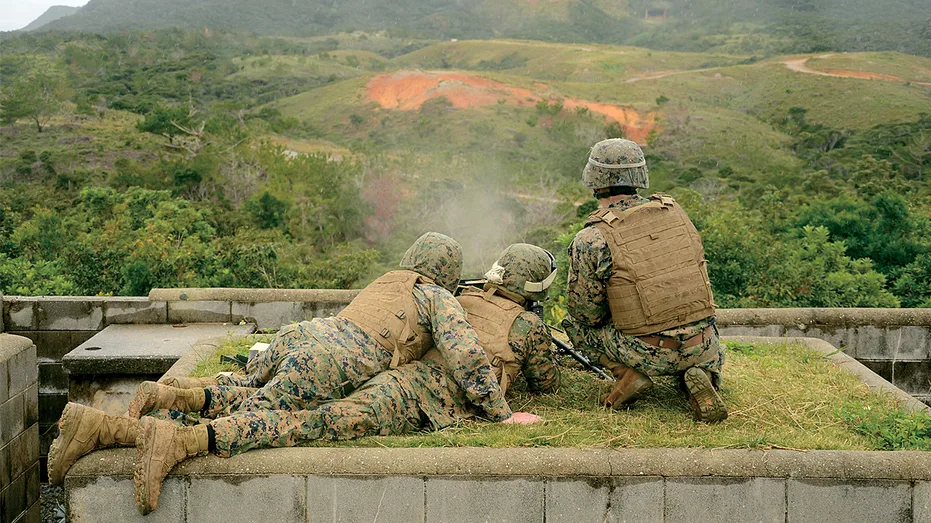
US Marine Dies in Training Incident at Camp Schwab, Okinawa
A U.S. Marine assigned to the 3rd Marine Division passed away following a training incident at Camp Schwab in Okinawa, Japan. The military is investigating the circumstances, and the Marine's identity is being withheld
Nov 5

US to Mediate Ukraine-Russia Negotiations in Abu Dhabi Next Week
U.S. officials are set to mediate a new round of talks between Ukraine and Russia in Abu Dhabi on November 10-11. The discussions aim to forge post-war security arrangements, de-escalation, and humanitarian efforts,
Nov 2
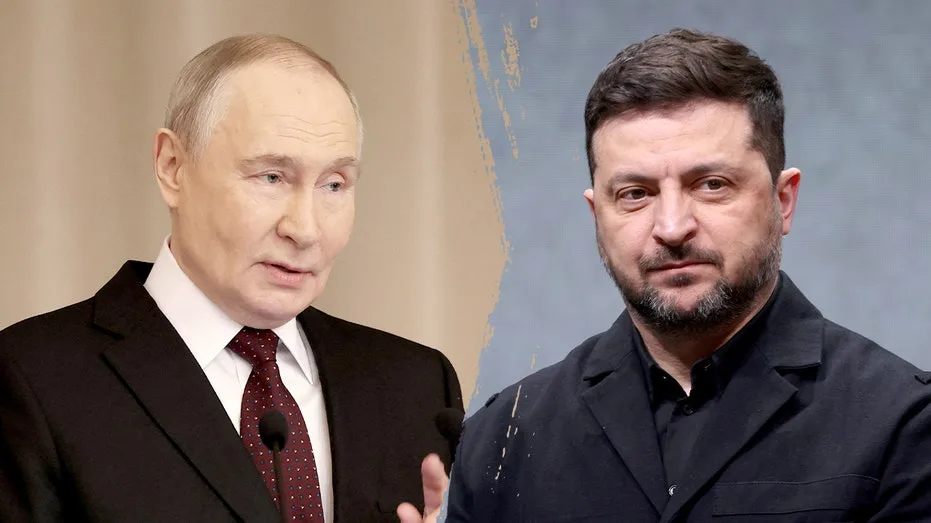
Ukraine President Zelenskyy Cautions Russia Plans 'Massive Attack' Amid US Midterm Elections
Ukrainian President Volodymyr Zelenskyy warns Russia is planning a "massive attack" during the US midterm elections, aiming to exploit diverted global attention. He urges increased pressure on Moscow, citing concerns
Nov 2

Ukraine's Air Alert System Compromised, Issuing False Radiation and Chemical Attack Warnings
Ukrainian authorities confirmed their air-raid alert app was hacked, broadcasting false warnings of radiation and chemical attacks in Kyiv. Officials quickly dismissed the alerts, attributing the incident to hostile
Nov 2