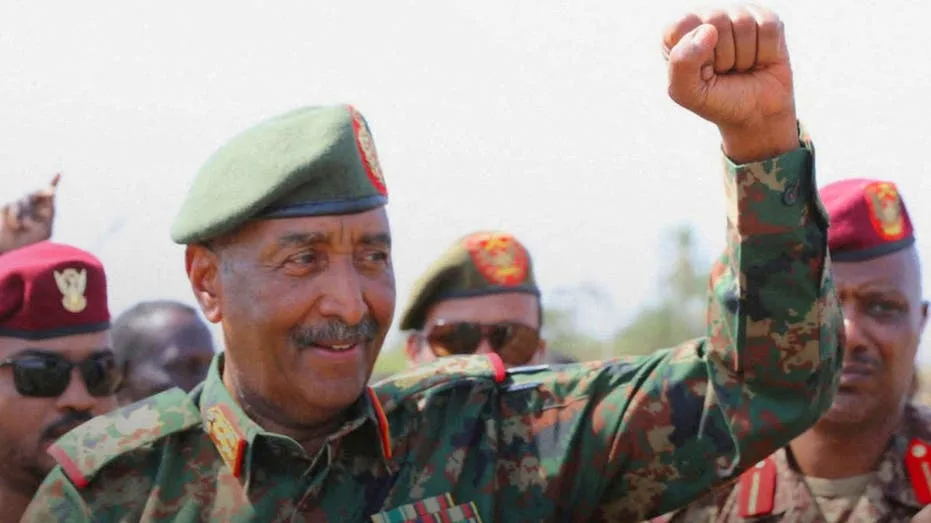
UNITED NATIONS — A diplomatic disagreement involving the United States' decision to withhold a visa for Sudan’s military leader to attend the United Nations General Assembly has brought into sharp focus a protracted conflict that has evolved into both a severe humanitarian catastrophe and a wider struggle for regional influence, extending to the vital Red Sea corridor.
General Abdel Fattah al-Burhan, who heads Sudan’s armed forces and serves as the nation’s de facto leader, was anticipated in New York for the UNGA session. However, the American administration declined his visa application amidst discussions surrounding a proposed 90-day humanitarian ceasefire. Days following this decision, General al-Burhan issued a defiant statement from Khartoum.
We will keep our heads high. We will not accept bargaining, sell ourselves cheaply to anyone or bow to anyone. We do not need a visa to any country or anyone’s permission.
The State Department has publicly criticized both General al-Burhan’s Sudanese Armed Forces (SAF) and the opposing paramilitary Rapid Support Forces (RSF), alleging that neither has demonstrated a genuine commitment to an immediate cessation of hostilities.
State Department spokesman Tommy Pigott stated on September 22 that, “Neither the Sudanese Armed Forces, the Rapid Support Forces, nor their respective leaders, represent legitimate, constitutional governance for Sudan,” adding that the conduct of both leaders rendered them “ineligible to govern the country.”
The State Department further indicated that both factions had instead escalated combat operations and drone attacks, resulting in civilian casualties. Washington, it noted, had repeatedly urged them to accept a humanitarian truce “without preconditions” and to commit to an inclusive political dialogue aimed at establishing a civilian government.
Dr. Amjad Farid Al-Tayyib, foreign affairs advisor to Sudan’s Transitional Sovereignty Council, countered these claims, asserting that Sudan had never rejected the American ceasefire proposal but had instead provided technical comments on it.
We never rejected this proposal. The Sudanese government wants war with no one.
Dr. Farid explained that a negotiating team had planned to accompany General al-Burhan, and he accused Washington of undermining the very diplomatic process it sought to advance by preventing the delegation’s travel.
A spokesperson for the US government affirmed ongoing collaboration with partners to encourage the warring parties to agree to a humanitarian truce, ensure humanitarian access, and halt external military or financial aid to the conflict participants. The spokesperson also noted that the Quad group of nations supports the Quintet-led civilian political track and opposes any parallel diplomatic processes that could fragment negotiations.
Cameron Hudson, a former director for African affairs on the National Security Council and chief of staff to several US presidential special envoys for Sudan, indicated his understanding that Washington had requested Sudan send a delegation to both the UN and to Washington for ceasefire discussions. He noted that the Sudanese were preparing for this, but his understanding was that Washington then made General al-Burhan’s visa conditional on signing the ceasefire agreement prior to travel.
Dr. Farid identified the core disagreement as whether the RSF would be compelled to withdraw from the civilian areas it currently occupies. He contended that freezing the existing lines of control risked transforming a temporary ceasefire into a de facto partition of Sudan.
Humanitarian Catastrophe and Allegations of War Crimes
This diplomatic friction unfolds against the backdrop of a brutal civil war that began in April 2023, stemming from a power struggle between General al-Burhan and RSF commander Mohamed Hamdan Dagalo, widely known as Hemedti.
Hudson emphasized the distinct nature of the atrocities, stating,
The RSF is committing war crimes on a scale and with an intention that the army does not.
While acknowledging that the SAF has also struck civilian targets and committed war crimes, including through drone attacks, Hudson argued that the RSF’s record is significantly more severe.
They have committed mass rape, mass killing, torture, sexual enslavement.
He contended that Western descriptions implying “both sides” are equally culpable can create a misleading impression that the two forces are committing comparable crimes “on the same scale or with the same intention.”
UN investigators have also drawn distinctions while documenting abuses by both forces. A UN fact-finding mission reported in September 2025 that both the SAF and RSF were responsible for direct, large-scale attacks against civilians and the destruction of critical civilian infrastructure. However, it specifically found that the RSF, particularly during its siege of El Fasher and surrounding areas, committed crimes against humanity including murder, torture, enslavement, rape, sexual slavery, forced displacement, and persecution based on ethnic, gender, and political grounds.
A separate report from the UN Human Rights Office, released in February, documented over 6,000 killings during the first three days of the RSF’s final offensive on El Fasher. It concluded that these violations could constitute war crimes and potential crimes against humanity.
Despite these findings, Dr. Farid accused the UN and Western governments of creating what he termed a “false equivalence” between Sudan’s military and the RSF. A UN spokesperson noted that both the RSF and SAF have employed explosive weapons in densely populated areas, and the UN Human Rights Office has documented attacks impacting schools, hospitals, markets, and religious sites.
The spokesperson specifically highlighted “particularly grave violations” by the RSF and its affiliated forces in Darfur, which include mass killings, sexual violence, torture, abductions, and forced displacement. However, serious abuses have also been documented in SAF-controlled regions, such as arbitrary detention, torture, ill-treatment, and summary executions.
Geopolitical Stakes and External Interference
Meanwhile, the conflict’s reach is increasingly extending beyond Sudan’s borders, with foreign backing becoming a crucial element. A UK government assessment from July 2026, based on UN and other reports, indicated that the RSF has benefited from support networks involving the UAE and neighboring countries, while the SAF has received assistance from states including Egypt, Iran, Pakistan, and Turkey. The UAE has consistently denied providing military support to the RSF.
Hudson suggested that the RSF’s foreign relationships are merely one aspect of a much broader regional competition. He noted that Egypt, Turkey, Saudi Arabia, Pakistan, and Qatar have supported the army to varying degrees, as external powers pursue their own strategic interests in Sudan.
This competition is increasingly concentrated on Sudan’s Red Sea coastline. “There is a regional battle of influence among neighboring states and regional states who want to be able to control Sudan’s Red Sea coastline,” Hudson explained, pointing to potential military, port, and economic access. He added that “Superimposed on top of the conflict inside Sudan is a regional proxy conflict for influence in Sudan and in the wider Horn of Africa, Red Sea region.”
Secretary of State Marco Rubio has also implicated foreign powers as central to prolonging the war. Speaking to reporters during UNGA week, Rubio described efforts to secure even limited humanitarian agreements as “very frustrating.”
What’s happening in Sudan would not be happening were it not for external actors supporting one side or the other.
Rubio stated that the parties have repeatedly agreed to commitments only to abandon them when one side perceives it is gaining an advantage. “There are external actors. I’m not going to single them out. You know who they are,” Rubio said. “That war and that conflict and that crisis would not be happening were it not for the active participation of external actors that are feeding one side of that conflict or another.” He concluded that meaningful progress would hinge on these states pressuring their respective partners in Sudan.
Until those external actors are prepared to use influence and pressure their respective proxies to live up to the commitments that they’re making, we’re not going to make progress.
Sudan’s strategic significance transcends its geography. The country possesses substantial gold, agricultural, and livestock resources, and is situated at the intersection of Africa and the Middle East. The World Bank has described Sudan as abundant in fertile land, water, and minerals, highlighting its significant gold production and agricultural potential.
Crucially, Sudan also manages critical infrastructure for transporting South Sudanese crude oil to the Red Sea. A World Bank assessment indicates that South Sudan’s oil has historically traversed pipelines across Sudan to Port Sudan, serving as its primary export route.
Challenges in International Diplomacy
Hudson suggested that this broader regional competition helps explain why Washington has struggled to compel Sudan’s external backers to disengage.
The United States is not going to use the limited political capital that it has with Saudi Arabia or Egypt or Turkey or UAE to get them to control their support to one side or the other in this conflict.
Hudson also questioned Washington’s diplomatic approach, arguing that pressure on General al-Burhan has not been matched by sufficient direct engagement within Sudan. He noted that Massad Boulos, a senior advisor for Arab and African affairs during the Trump administration, has never visited Sudan despite attempting to mediate the conflict.
He’s trying to mediate peace in a country that he’s never been to.
Hudson argued that Washington requires more “personal diplomacy” and less reliance on public statements and social media. “If we want these people to sign a ceasefire deal, then they have to trust us,” Hudson said. “And right now we’ve given them no reason to do so.”
The UN acknowledged that international efforts have so far failed to halt the fighting. A UN spokesperson stated, “Unfortunately, we are not seeing the war abating,” reiterating the UN’s stance that “there is no military solution to the conflict.” The spokesperson also highlighted Washington’s diplomatic role, as the US and African Union co-chaired a September 23 meeting bringing together the Quad and Quintet diplomatic groupings.
The immediate priority is to stop the killing and secure a cessation of hostilities, while creating the conditions for a credible political process.